


02 Jun Thinkpiece
In this update:
- Hidden in plain sight.
In the world of investing, we often talk about risk as a set of numbers and we refer to these numbers using words such as volatility and standard deviation.
But for most of us, risk is an emotion. When markets are turbulent, risk feels like a knot in the stomach. As Howard S Marks quoted, ‘Risk never looks like risk when markets are rising.’
As we navigate the current financial landscape, this insight is more relevant than ever. When the market is steady and global markets are climbing, it’s easy to mistake a rising tide for personal genius.
Not knowing what you are doing during the good times is the greatest risk of all.
The Illusion of Safety
When markets are performing well, risk doesn’t look like a threat. It looks like an opportunity cost. You see a friend making 15% on a speculative tech stock or a crypto asset, and suddenly, your diversified appropriately constructed portfolio looks boring!
There is a danger here – complacency. Some investors can begin to increase their exposure to higher-risk assets right at the moment they should be more cautious. In a bull market, everything works well — until it doesn’t work at all. That’s just the price of admission and you’ll never change that. It is a simple fact of investing. We have to take the rough with the smooth.
There are 3 areas particularly to focus on when (increasing) risk is concerned:
- Risk Creep – Without a professional strategy, your portfolio can drift. An equity rally might mean your portfolio is now holding 80% in equities when you only intended it to be 60%. If the market turns, you are exposed far beyond your actual comfort level.
- Confusing Luck with Skill – Rising markets can mask fundamental flaws in one’s investment logic. If you don’t understand why your investments are growing, you won’t know when the ‘why’ has changed or the reasons for it!
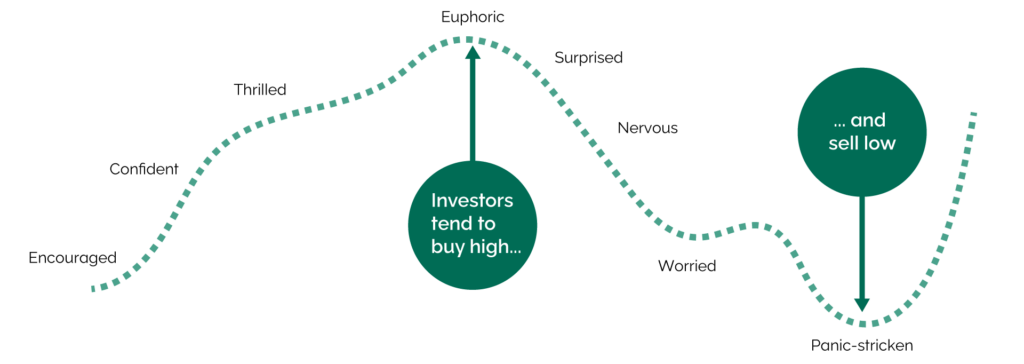
- The ‘Get Out at the Top’ Myth – Many DIY investors believe they will simply sell before the crash. History shows that most do the exact opposite — they buy more at the peak and panic-sell at the bottom.
Understanding the “Risk of Not Knowing”
True risk isn’t just the market going down, it’s the permanent loss of capital because you were forced to sell at the wrong time.
The most dangerous thing is the belief that risk is low, or has been banished. Such optimism is what creates the excesses that eventually lead to the downfall.
Howard S Marks
How We Manage the Unseen
Our role as financial planners and advisers is to be the voice of reason when the markets are shouting for you to take more risk.
We focus on:
- Stress-Testing – We look at how your portfolio would handle a repeat of 2008 or 2020, not just how it looks today.
- Rebalancing – Systematically selling high and buying low to maintain your agreed risk profile.
- Tax Efficiency – Ensuring that what you own is held in the most effective tax wrapper for your specific circumstances, needs and objectives.
Final Thought
Investing should be a marathon, not a sprint. If your current strategy is based on the fact that ‘everything has been going up lately,’ you may be carrying more risk than you realise.
Risk is most potent when it is invisible. By the time it becomes visible, the damage is often already done. If you’re unsure whether your portfolio is truly aligned with your long-term goals—rather than just the current market mood—now is the time for a conversation.
Your opportunity
If you’ve not yet put in place a sound financial plan and you’d like to know more, please feel free to contact us on 01626 305318 or via email here.
The value of investments can go down as well as up. You may end up with less back than you have paid in. Past performance is no guarantee of future returns.
The views expressed are not to be taken as financial advice. Professional advice should be sought before proceeding.
Sorry, the comment form is closed at this time.